A modular jewelry display system is a set of coordinated stands, busts and trays you rearrange without replacing the set. Custom modular jewelry display sets suit brands that change collections often. We build them to your size, color and logo specifications.
A new collection arrives, and the display set you ordered last season no longer fits the product mix. The pieces are sound, but the set was built for one arrangement. Modular jewelry displays fix that by letting you move the components instead of replacing them.
This guide covers how modular systems work, where they fit better than fixed sets, which components to specify and what a manufacturer needs to quote accurately.
ROMI Packing is headquartered in Shenzhen and makes custom modular jewelry display sets & systems in our own factory in Huizhou, China. We have manufactured jewelry packaging for more than 19 years, with 300+ workers and an in-house design team. Displays start from 10 sets. We have exhibited at JCK Las Vegas, the HKTDC Hong Kong International Jewellery Show and JIS Fall 2026.
What Is a Modular Jewelry Display System?
A modular jewelry display system is a group of movable or interchangeable components that share one design language. You rearrange them into different layouts, and the presentation stays consistent. Modular jewelry displays are built for that: the parts move, and the look does not.
Many buyers call this a reconfigurable jewelry display. It is one format within custom jewelry displays for jewelry stores and brands.
How Modular Jewelry Displays Differ From Fixed Display Sets
The difference is intent. A fixed jewelry display set holds one coordinated arrangement. A modular display system is built to change, and modular jewelry display sets give you the parts to do it. Buyers comparing custom jewelry display sets should first decide whether their layout will stay fixed.
| Feature | Fixed display set | Modular display system |
| Arrangement | One predetermined layout | Many layouts from the same parts |
| Product mix changes | Often needs new pieces | Move, add or remove components |
| Layout changes | Limited | Designed for repeated changes |
| Reorders | Reorder the whole set | Order matching modules (quantity confirmed per project) |
| Planning needed | Low | Higher: define the full component list up front |
| Best for | Stable assortments and layouts | Changing collections and campaigns |
The tradeoff is planning effort. A fixed set is tuned to one composition, while a modular system needs its full component list defined before sampling.
Fixed Jewelry Display Sets
A fixed jewelry display set prioritizes one coordinated presentation. It works well when your layout and assortment stay stable. A flagship counter with a permanent range is a typical case for a jewelry display set. Every piece is sized and placed for that one composition, so the set looks finished on day one. The cost appears when the assortment changes: the layout no longer fits, and the fix is new pieces.
Modular Jewelry Display Systems
Modular jewelry display systems prioritize flexibility. Components move, and layouts change repeatedly. These modular jewelry displays stay visually consistent because every module shares the same finish and design language. Flexibility has a price: because any module may be moved, every module has to share finish, color and proportions from the start, and the full component list has to be defined before sampling.
When a Modular System Is the Better Choice
A custom modular jewelry display suits buyers who:
- Change collections several times a year
- Shift priority between necklaces, rings, earrings and bracelets
- Rearrange showcases for merchandising campaigns
- Show the same assortment in showcases of different sizes
Reconfigurable jewelry displays are less useful when nothing about your range or layout will change. If you have a brand direction but no drawings, our OEM/ODM team manages the project from concept to production. The brief section below lists the inputs we need.
Components of a Modular Jewelry Display Set
Each component type works as a module inside one modular jewelry display set. The modular jewelry display components you choose depend on your assortment. A set works as a system because each type has a different job: busts and stands hold the focal pieces, holders and trays group the small ones, and platforms, bases and risers set the height.
Movable Necklace Busts & Pendant Stands
In a modular necklace display, the necklace display bust and the pendant stand act as focal points. When a necklace collection leads, you move them to the front or center of the layout. Choose the bust surface to match the rest of the set, for example microfiber or velvet. On the Purple Microfiber set, the necklace bust is the tallest listed component at 135 x 140 x 350 mm.
Buyers choosing custom necklace display busts and stands should check bust height against showcase depth.
Interchangeable Ring, Earring & Bracelet Holders
Smaller holders sit around the focal pieces. A ring holder, earring holder or bracelet display moves as the assortment changes. Modular jewelry display stands in a matching finish keep these smaller pieces consistent.
We make jewelry display stands and holders to suit your jewelry types and product sizes, including holders for stud and dangle earrings.
Movable Jewelry Display Trays
Modular jewelry display trays work as movable modules. You add, remove or reposition a tray inside a larger configuration. A tray groups small pieces on one level, while a riser adds height.
We discuss custom jewelry display trays against the size of your showcase interior. Share the dimensions in your brief.
Platforms, Bases & Risers
Modular display platforms change component height and visual hierarchy. Jewelry display risers lift rings and pendants above the display surface, while jewelry display bases anchor taller pieces. Together they decide how each layout reads. Height does the merchandising work: higher elements draw the eye first, so the module that holds your lead collection belongs at the top of the hierarchy.
The Purple Microfiber set below applies this: higher elements suit necklaces and statement pieces, while lower platforms and smaller holders suit rings and earrings.
Reconfigure Your Display for Changing Jewelry Collections
The core value of modularity is simple. A reconfigurable jewelry display lets one coordinated system support different assortments and product priorities over time.
You change the layout, not the whole set. A flexible jewelry display system built from modular jewelry displays makes that routine.
Rearrange Displays When the Product Mix Changes
Suppose ring sales grow and necklace volume falls. You move or replace modular display components so the display matches the new balance. A rearrangeable jewelry display avoids a full reorder.
Change Focal Points for New Collections
Reposition taller busts, stands or platforms to make a new collection dominant. A 2017 eye-tracking study from Mendel University with 22 participants found shelf level significantly changed shopper attention in four of five grocery categories. Modular display components at different heights can guide the eye to priority pieces.
This is how a modular jewelry display layout supports a launch. The jewelry display focal point moves with the collection.
Add or Remove Components as Needed
Adjust the number and types of components instead of replacing the whole presentation. Add a module for a larger range. Remove one when the range narrows.
Interchangeable jewelry display components make a modular jewelry display easy to scale.
Recommended: Purple Microfiber Modular Jewelry Display Set
For a working example of modular jewelry displays, review the Purple Microfiber Modular Jewelry Display Set. The collection combines necklace busts, earring stands, ring displays, bracelet displays and supporting display blocks. You can arrange them together as one coordinated jewelry display system or use them separately, which creates different display compositions without changing the overall design language.
The set pairs premium microfiber surfaces with a stable MDF structure. The MDF core gives the display components a stable foundation, and the microfiber exterior keeps one texture across the collection.
Color, size, material, logo and configuration are all customizable on this set, which is how a standard set becomes a custom modular jewelry display. It suits window displays, retail counters, showcases and boutique stores.

Create Different Layouts With the Same Modular Display System
A modular component library produces different compositions without changing the design language. Surfaces, colors and proportions stay constant. Only the arrangement changes.
That is what makes a flexible jewelry display look intentional in every modular jewelry display layout. A configurable jewelry display built this way adapts to each collection.
Compact Layouts for Smaller Assortments
Consolidate modules when you have fewer products or less space. A compact jewelry display layout keeps the modular jewelry display recognizable in a small footprint, because every module shares the finish and a smaller arrangement still reads as one set. The Purple Microfiber page lists pop-up stores, which it describes as temporary merchandising environments, and trade shows among its applications.
Expanded Layouts for Larger Collections
Spread components across a larger area for a bigger collection. A large jewelry display layout stays consistent because the modular display system shares one finish. Add risers to build height across the wider space.
Mixed-Jewelry Layouts
Configure modules to present necklaces, rings, earrings and bracelets together. Place a bust as the focal point, then group ring holders and earring stands around it. A mixed jewelry display built from one modular jewelry display set looks planned, not assembled.
Customize the Components of a Modular Jewelry Display System
A custom modular jewelry display stays rearrangeable while you define dimensions, component combinations, shapes and structures. A customized modular jewelry display system also carries your brand identity without compromising how the jewelry is presented. Color, size, logo and material can all be customized.
Custom Component Sizes & Heights
Choose custom modular display dimensions that work together across layouts. Match widths to your showcase, and vary jewelry display height to create hierarchy. Share your showcase dimensions in the brief so sample sizes match your layout. On the Purple Microfiber set, reference component sizes include 30 x 30 x 55 mm pieces and a 135 x 140 x 350 mm necklace bust, and custom dimensions are available to suit jewelry size, showcase dimensions and counter layout. Final dimensions are confirmed against the approved technical drawing and display plan.
Custom Shapes & Component Structures
Adapt each module to your visual language and assortment. Tell us the look you need, and our in-house design team works on the jewelry display structure of your custom modular jewelry display.
Choose the Number & Type of Modules
Not every custom display system needs the same components. Select the modular jewelry display components, such as busts, holders, trays, bases and risers, that your assortment requires. A ring-led range may need more holders and risers than busts. On the Purple Microfiber set, the mix of necklace busts, earring displays, ring holders, bracelet stands, platforms and supporting pieces can be adjusted to your product assortment.
Coordinate Colors, Materials & Surface Textures Across Modules
Interchangeable pieces need coordinated surfaces and colors, or alternate layouts look accidental. Whichever jewelry display materials you choose, apply them across the whole system. A microfiber modular jewelry display and a suede jewelry display both work when every module matches.
Keep Interchangeable Components Visually Consistent
Movable modules should share one design language. The same surface, finish and edge detail make every layout look intentional. A coordinated modular jewelry display reads as one jewelry display system, whatever the arrangement.
Match Colors Across the Modular System
Apply one color specification across busts, stands, trays and bases. Send a reference such as a Pantone code with your brief. A custom color jewelry display can then follow your brand palette across the modular jewelry display set.
Color also sets the contrast. A muted tone, like the purple on the Purple Microfiber set, creates a soft contrast that can help highlight diamonds, gold and pearls.
Coordinate Microfiber, Suede or Velvet Surfaces
Choose one surface family for all modules. A microfiber jewelry display, a suede jewelry display and a velvet jewelry display each give a different look. Mixing them breaks the coordinated look, so decide before sampling.
On the Purple Microfiber set, the microfiber finish gives a more sophisticated visual effect than conventional hard display surfaces.
Use Modular Displays in Counters & Glass Showcases
Counters and glass showcases have fixed dimensions, while collections change. A modular jewelry counter display or a modular jewelry showcase display closes that gap.
We build custom jewelry counter and showcase displays so each arrangement fits the space you have. The Purple Microfiber page lists retail counters, where the pieces present different jewelry categories within a limited space, and glass showcases among its applications.
Reconfigure Components Within Showcase Dimensions
Measure the showcase width, depth and height first. Then arrange modules inside those limits. A modular showcase display lets you test several jewelry showcase layouts without buying new components.
Change Product Density Without Replacing the Set
Add modules when more products need space. Remove them when the showcase needs room. This modular counter display approach keeps one flexible jewelry display in use across seasons.
Use Modular Systems for Jewelry Window Displays
Storefront windows change with collections and seasons. A 2016 Journal of Business Research study by Lange, Rosengren and Blom found that more creative windows attract more store visits.
A modular jewelry window display uses movable components to support new compositions without a new build. A reconfigurable window display also lets you reuse props between collections. We make custom jewelry window displays and props to your specification. The Purple Microfiber page lists storefront windows too: different heights and display forms combine into a layered window presentation for seasonal collections.
Rearrange Display Heights & Focal Points
In a modular jewelry window display, you reposition platforms, busts and stands to change the hierarchy. Taller pieces draw attention first. Lower pieces support the display heights around them.
Reuse Modules for Different Collections
Reuse the same modular display components in new compositions as collections change. A reusable jewelry display system spreads one order across many window changes.
Add Your Logo & Brand Identity to a Modular Display System
A branded modular jewelry display keeps your identity consistent while components move. Logos, brand colors and coordinated finishes carry across every layout.
We make custom logo jewelry displays for brands that want identity without competing with the jewelry. A modular branded display should read clearly but never overpower the pieces.
Logo Placement Across Modular Components
Place the logo on components that stay visible in every layout, such as bases or platforms. Avoid putting your only logo on a piece you may remove, because a logo jewelry display depends on that visibility. For a custom logo modular display, we agree the logo method with you for each surface and desired visual effect.
Keep Branding Consistent Across Different Configurations
Consistent colors, surfaces and logo treatment hold your identity steady when the layout changes. Specify them once for the whole branded jewelry display system. A modular jewelry display then stays recognizable in a showcase, on a counter or in a window.
Modular Jewelry Displays for Multi-Store Retailers
Multi-store retailers need one design language across locations that differ in size and assortment. A retail jewelry display system made of modular jewelry displays for stores fits that need.
Retailers ordering wholesale jewelry displays for several locations can specify one component family. Wholesale modular jewelry displays then scale from one store to many. The Purple Microfiber page makes the same point: the modular structure makes it easier to develop coordinated display concepts across multiple retail locations and to customize them by store layout, product category and brand style.
Use the Same Component Family Across Different Stores
Standardize one family of jewelry display components across your modular displays for stores. Each store arranges them to suit its own space. You get consistent specifications and one specification sheet for the factory. Because we manufacture in our own factory, we control quality and lead time.
Adapt Layouts to Different Store Sizes
Use more modules in a larger store and fewer in a smaller one. A scalable jewelry display, built as a modular retail display, keeps the same look at either size.
Reorder Matching Modules When Needed
Defined specifications for modular display components make additions and replacements simpler to quote. Keep your color references, material choices and logo files, and send them with a repeat jewelry display order so new modules match the first batch. Confirm the quantity for add-on modules with your quote, since minimums for custom products vary by item.
What to Specify for a Custom Modular Jewelry Display Project
A complete brief leads to a more accurate quote. Share your custom modular jewelry display requirements below, so a modular jewelry display manufacturer can design and price the system.
Jewelry Types & Required Modules
State which jewelry categories you will display. Then list the modular jewelry display components you need for each, such as busts, stands, trays, bases or risers. Include any jewelry display modules you may add later.
Display Area & Possible Layouts
Share showcase or window dimensions, which set your modular jewelry display dimensions. Tell us whether you expect several configurations. Sketches of two or three target jewelry display layout options help us check component fit.
Quantity, Colors, Materials & Logo Requirements
List quantities, color references and surface materials for your custom modular jewelry display. Add logo files in AI, PDF, CorelDraw, 3D Max or high-resolution JPG for a branded jewelry display.
You do not need to commit to bulk volume first. Displays start from as few as 10 sets, so you can approve the sample first, then place an order near the minimum. Add-on module quantities are confirmed with your quote. You also do not need a business license or import registration to place an order.
Recommended: ROMI Jewelry Display Stands for Store Luxury Jewelry Store Showcase Exhibitor Display Set
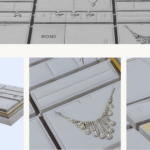
The ROMI Luxury Jewelry Store Display Set (SKU RMD-105) is a white jewelry display set made for luxury jewelry stores and showcase exhibitors. The page lists six components, with sizes such as 60 x 60 x 30 mm, 200 x 60 x 120 mm and 315 x 120 x 10 mm (L x W x H). The product images show them arranged together as one coordinated white presentation.
Use a set like this as a reference when you specify modular jewelry display components for a luxury jewelry display system. Decide which jewelry categories each piece must serve, then ask for the mix of components and the layout that suit your assortment and showcase width. Display quality should match the caliber of the jewelry, and one coordinated jewelry showcase display set keeps the presentation consistent with the pieces on show.
Color, size, logo and material can be customized on these jewelry display stands for store use. The minimum order is 10 sets.

Sampling & Production for Modular Jewelry Displays
Confirm component specifications and system compatibility with a modular jewelry display sample before bulk production. A sample shows whether modules fit together, hold the jewelry and match your color and surface. Lay out each of your target arrangements with the sample modules before you approve it. Our order process puts sample confirmation ahead of the contract, the deposit and mass production.
Samples take about 7 to 15 days, and custom jewelry display production takes about 25 to 35 days. Minimums, lead times and shipping are covered in MOQ, sampling and production lead times.
For a custom sample, we discuss the sample cost based on its value. We refund that cost after you place the order. If you are not satisfied with an order, we remake it or offer a partial refund.
Request a Custom Modular Jewelry Display Quote
A modular system lets one coordinated display serve changing collections, layouts and stores. To prepare a modular jewelry display quote, we need:
- Jewelry categories and the modules required
- Display dimensions and target layouts
- Quantities
- Preferred materials and colors
- Branding requirements
- Reference images or drawings
Send these to our team and we follow up with pricing, lead time and next steps. After the quotation you confirm the sample, sign the contract and pay the deposit before mass production starts. Factory visits and video calls are welcome. To start, request a quote for custom modular jewelry display sets built to your specifications.
Custom Modular Jewelry Display FAQs
These modular jewelry display FAQ answers cover the questions buyers ask most before ordering a custom modular jewelry display.
What Makes a Jewelry Display Modular?
Modularity comes from modular display components that are designed to work together and allow rearrangement. Two things make it work: a shared design language (the same surface, color specification and proportions) so any arrangement reads as one set, and a component list defined up front so every layout you plan is covered. Without both, you have loose stands that happen to match. A modular jewelry display uses compatible modules, so you build new layouts from the same parts.
Can We Change the Layout Without Replacing the Complete Display Set?
Yes. That’s what a reconfigurable jewelry display is for. The pieces will fit with other arrangements. A flexible jewelry display lets you rearrange the pieces you have.
Can We Add or Remove Display Components Later?
In principle, yes, subject to the specifications of the selected system. Plan the full set of modular jewelry display components up front, and confirm with your quote which add-on modules and quantities are available. An expandable jewelry display can then grow with your range.
Can a Modular Display Hold Different Types of Jewelry?
Yes. A mixed modular jewelry display combines necklace, ring, earring and bracelet components in one modular jewelry display set.
Can Modular Displays Be Customized to Match Our Brand?
Yes. We customize visual specifications such as color, size, material and logo, so a branded modular jewelry display matches your identity. That is what makes it a custom modular display.
Can We Use the Same Modular System Across Multiple Stores?
Yes. Standardize one component family and let each store arrange it to fit its space. This works well for modular jewelry displays for stores of different sizes, including wholesale modular displays ordered for several locations.
Which supplier offers sample approval before bulk production?
ROMI Packing does. We are a manufacturer with our own factory and an in-house design team, not a trading company. The factory gives us control over quality and lead time, and it holds SGS authentication. Our products also comply with REACH and lead, cadmium and nickel-free standards for European and US markets. Our process puts sample approval before bulk production, so you confirm fit, dimensions and finish on a jewelry display sample before any modular jewelry display goes into production.