

The most common mistakes when ordering custom jewelry boxes include incomplete specifications, choosing materials by looks alone, mismatched jewelry and box sizing, unclear artwork, and skipping the sample stage: five of the ten buyer mistakes this guide covers, each paired with a practical fix below. These mistakes raise the risk of delays, rework, or quality problems. Confirming details early and testing a sample before mass production avoids most of these issues.
Every jewelry brand owner has heard a version of the same story. An order arrives late, the box does not fit the pieces, or the finish looks nothing like the sample photo.
The real issue rarely starts on the factory floor. It starts weeks earlier, when someone leaves a specification incomplete or skips the sample stage to save time. Avoiding these problems means treating the weeks before production as seriously as production itself. Once you know where buyers commonly go wrong, you can act with confidence.
This guide covers ten common mistakes buyers make when ordering a custom jewelry box. Each one includes a practical way to avoid it. Getting these decisions right protects your launch date and your budget for custom jewelry packaging. Use it before your next production run, while problems are still cheap to fix.
Mistake #1: Ordering Without a Complete Jewelry Box Specification
A jewelry box specification is more than a rough idea. It is the full set of details a manufacturer needs to develop, sample, and quote your project accurately.
Missing details lead to guesswork. Guesswork leads to a sample that misses the mark, wastes time, and pushes your launch date back.
Our custom jewelry box design and packaging engineering service works through your requirements with you before development starts.
What Should Your Jewelry Box Specification Include?
- Jewelry box dimensions and structure
- Exterior and interior materials
- Insert type and jewelry placement
- Logo position and branding method
- Colors and finishes
- Order quantity
- Packing requirements
- Any special functional needs
Mistake #2: Comparing Suppliers Only by Per-Unit Price
The lowest quoted price is not always the best value. Compare suppliers on:
- Material and construction quality
- Level of customization offered
- MOQ and setup requirements
- Quality control process
- Packing standards
- Communication and production reliability
Our custom jewelry box cost factors guide breaks down what actually drives per-unit pricing.
Understand MOQ and Quantity Before Requesting a Final Quote
Quantity affects almost every part of your quote, from material purchasing to setup costs and per-unit pricing.
Give a realistic initial quantity, along with any expected repeat orders, so the quote reflects your actual project.
See our custom jewelry boxes wholesale page for typical MOQ ranges across box styles.
Mistake #3: Choosing Materials Based Only on Appearance
A material can look right in a photo and still perform poorly in real use. Exterior and interior materials affect durability, feel, jewelry protection, and cost, not just appearance.
They also affect how well a finish or logo method will apply. Some materials suit foil stamping. Others suit debossing or printing instead.
Our guide to jewelry box materials and finishing options breaks down which materials suit which finishes and price points.
Match Materials to the Jewelry and Brand Positioning
Different jewelry types need different levels of structure and cushioning.
- Rings and earrings often need firm inserts that hold small pieces in place
- Necklaces and bracelets need enough depth and lining to prevent tangling
- Watches need rigid structure and secure cushioning
- Fine jewelry usually needs a higher level of protection and finish than fashion jewelry
Getting jewelry box materials right for each category is what good jewelry packaging material selection comes down to.
Mistake #4: Choosing the Box Before Confirming Jewelry Fit
Box size should follow the jewelry, not the other way round: choose the right jewelry box size only after you know your jewelry’s dimensions and how the piece should sit inside the box.
Inserts do the real work of holding jewelry in place during handling and transit. Common options include cavities, slots, elastic bands, hooks, pads, and foam or EVA structures — the same shock-absorbing logic behind standardized transit-simulation testing used across the packaging industry to evaluate protection before shipment.
Test the Jewelry and Insert Together
Always test the actual jewelry, or an accurate prototype, against the box and insert during sampling.
Check that the piece sits securely. It should not move around, press too tightly, or come out with difficulty.
Our custom jewelry boxes by jewelry type page shows how insert design changes across rings, necklaces, bracelets, and watches.
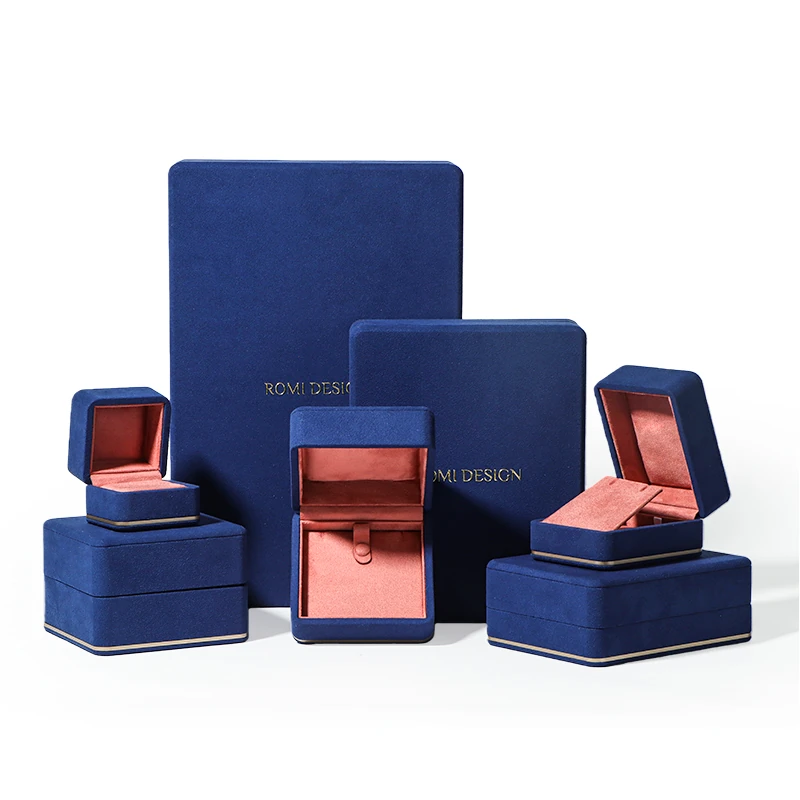
Mistake #5: Sending Incomplete or Production-Unready Logo Artwork
Artwork problems are one of the most avoidable causes of production delay. Common issues include:
- Low-resolution logo files
- Unsuitable file formats
- Missing color references
- Unclear size or placement instructions
Production-ready artwork, with clear branding requirements documented upfront, prevents most of these issues before they start.
Explore our custom logo jewelry boxes with premium branding options to see what production-ready artwork should look like.

Confirm the Branding Method, Size and Placement
Branding method and material need to match. Foil stamping, printing, embossing, and debossing each work differently depending on the surface.
Confirm your logo size, placement, color, and application method during development, not during production. Getting these details right is what separates an ordinary box from one that creates a better jewelry unboxing experience, since a logo that looks off-center or poorly applied undercuts the whole presentation.
Mistake #6: Skipping the Physical Sample Before Mass Production
A sample is the one chance to catch dimension, material, color, logo, insert, and opening-and-closing problems before they multiply across your full order.
Skipping this step to save time usually costs more time later, once problems surface in mass production.
Learn more about our sampling, MOQ, and production timeline process and how it fits into your overall production timeline.
What Should You Check When the Sample Arrives?
Go through the sample systematically rather than glancing at it.
- Dimensions and jewelry fit
- Material feel and construction quality
- Opening and closing action
- Logo execution and placement
- Colors, finishes, and inserts
- Overall workmanship and presentation
If you need changes, list them all at once. Consolidating revisions avoids a slow back-and-forth before final approval.
Mistake #7: Approving Colors and Finishes Without Clear References
Color on a screen rarely matches color in production, because screens create color with emitted light while physical materials show it through reflected light, which is why lighting, monitor settings, and material texture all change how a color reads.
Provide a physical color reference where possible. Use the sample stage to confirm colors, textures, and finishes before approving mass production. Careful jewelry box color matching at the sample stage catches this mismatch before it reaches your full production run.
For inspiration, see jewelry packaging color choices from leading jewelry brands.
How to Set a Reliable Color Reference
- Request a physical color swatch or Pantone reference, not a screen preview
- Confirm color under consistent, neutral lighting
- Check color against the actual material and finish, not a similar-looking sample
- Approve color at the same sample stage as texture and finish
Mistake #8: Making Major Changes After Sample Approval
Once a sample is approved, the factory locks in tooling, material orders, and production planning around it.
A major change after sample approval can affect pricing, lead time, and consistency across your order. Avoid it by treating sample approval as a genuine final decision point: list every open question before you sign off, not after.
Our OEM and ODM jewelry box manufacturing services are built around getting these decisions right before mass production starts.
What to Lock In Before You Approve
- Dimensions, materials, and structure
- Logo size, placement, and application method
- Colors and finishes
- Insert configuration and jewelry fit
- Final quantity and packing requirements
Mistake #9: Assuming Sample Approval Guarantees Mass-Production Consistency
An approved sample sets the target. It does not guarantee that every unit in a large order will match it.
Mass production still needs systematic quality control at every stage, checked against the approved sample — the discipline behind internationally recognized quality management standards like ISO 9001.
Read about our jewelry packaging quality control standards to see how consistency is maintained across a full order.
Use the Approved Sample as a Production Benchmark
Keep the approved sample, final artwork, and confirmed specifications on hand throughout production.
Use them as the benchmark for every inspection, from incoming materials through to pre-shipment checks.
Mistake #10: Planning Production Too Close to Your Launch Date
Production time is only one part of your timeline. A realistic schedule also accounts for:
- Confirming requirements and specifications
- Sampling and revisions
- Sample approval
- Material preparation
- Mass production
- Quality control and packing
- Transportation to your destination
Plan backward from your required delivery date, not forward from your first inquiry. This is how smart buyers source custom jewelry packaging on a timeline that actually holds.
Build Sampling, Production and Shipping Into Your Timeline
A realistic timeline takes pressure off every other decision.
You are less likely to rush a sample approval, accept an unresolved specification, or choose unsuitable shipping just to save a few days.
Custom Jewelry Box Pre-Order Checklist
Ordering custom jewelry boxes comes down to a short list of details confirmed before production starts. Run through this checklist before you place your order:
- Jewelry dimensions and box dimensions
- Box structure and intended use
- Exterior and interior materials
- Insert type
- Final artwork and branding method
- Colors and finishes
- Order quantity
- Sample approval
- QC expectations
- Packing requirements
- Required delivery date
- Shipping destination
If your boxes need to handle both retail display and shipping, plan for both from the start. The difference between jewelry boxes for retail display vs shipping often comes down to structure and materials, not just branding, so decide early which one your packaging needs to prioritize.
Custom Jewelry Box Example to Consider
It helps to see a working custom jewelry box example rather than starting from a blank page.
An existing design gives you a starting point for your own custom jewelry packaging. Dimensions, materials, colors, inserts, logo application, and finishes can all be customized around your jewelry and brand.
Even so, always confirm the final specification through sampling before mass production.
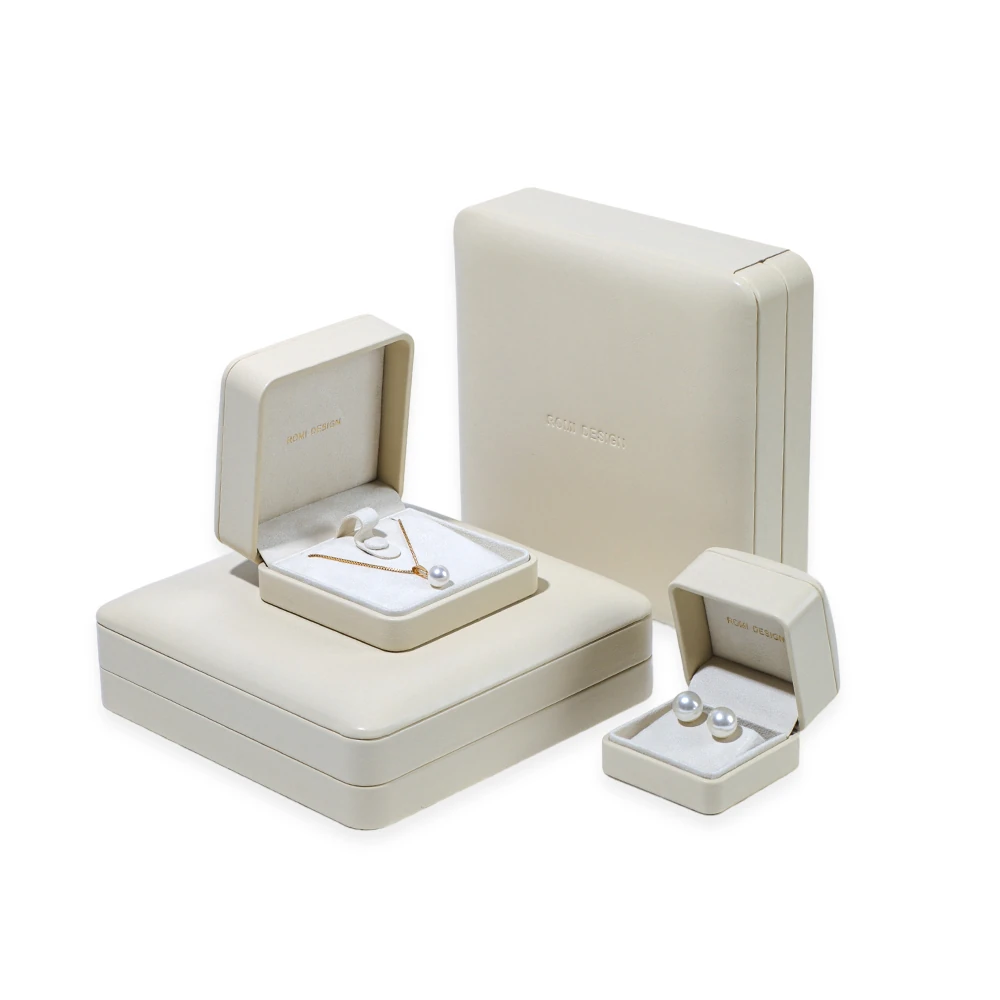
Recommended Custom Jewelry Box: Cream Faux Leather Jewelry Box with Velvet Interior
As a custom jewelry box manufacturer, ROMI offers the Cream Faux Leather Jewelry Box with Velvet Interior as a good starting point: a simple, single-piece structure in faux leather and velvet that holds up across ring, pendant, and necklace formats, and that you can adapt in size, color, and branding to your own specification.
It uses a faux leather exterior with a soft velvet interior, and comes in ring, pendant, large pendant/necklace, and 3-in-1 formats.
- Structure: ring box, pendant box, large pendant/necklace box, or 3-in-1 set
- Materials: faux leather exterior, soft velvet interior
- Suits: rings, earrings, pendants, necklaces, and gold, silver, pearl, or gemstone pieces
- Customization: material, color, size, interior structure, and logo application
- Branding: suits hot stamping, embossing or debossing, screen printing, laser logo, or metal logo plates, making it a flexible custom logo jewelry box. These are good options for personalized jewelry packaging without changing the base structure.
Adapt the dimensions, materials, and branding to fit your own jewelry and brand, then confirm the final version through a sample before production.
How ROMI Helps Reduce Custom Packaging Risks From Design to Delivery
Every mistake in this guide connects back to one thing: clear decisions made early, and confirmed at the right checkpoints.
With our own 19+ years of experience as a custom jewelry box manufacturer and a 5,000 m² factory built for OEM jewelry packaging production, ROMI works through your requirements, customization options, and design support before moving into OEM and ODM development. From there, sampling, manufacturing, quality control, packing, and worldwide shipping follow a coordinated process with approval checkpoints at each stage. It’s the kind of process buyers expect from an established custom jewelry packaging manufacturer.
Read more about why brands choose a reliable jewelry box manufacturer like ROMI for their custom packaging.
Ready to Order Custom Jewelry Boxes? Discuss Your Project With ROMI
Send us your jewelry type, dimensions, preferred box style, material preferences, branding requirements, quantity, and target timeline, the same details from the checklist above. As your custom jewelry packaging manufacturer, we will review your requirements, recommend production-ready options, and prepare a quotation before developing a sample.
Browse our full custom jewelry box service for what’s included, or request a custom jewelry box quote directly and start your project with a manufacturer who gets these details right from the start.

